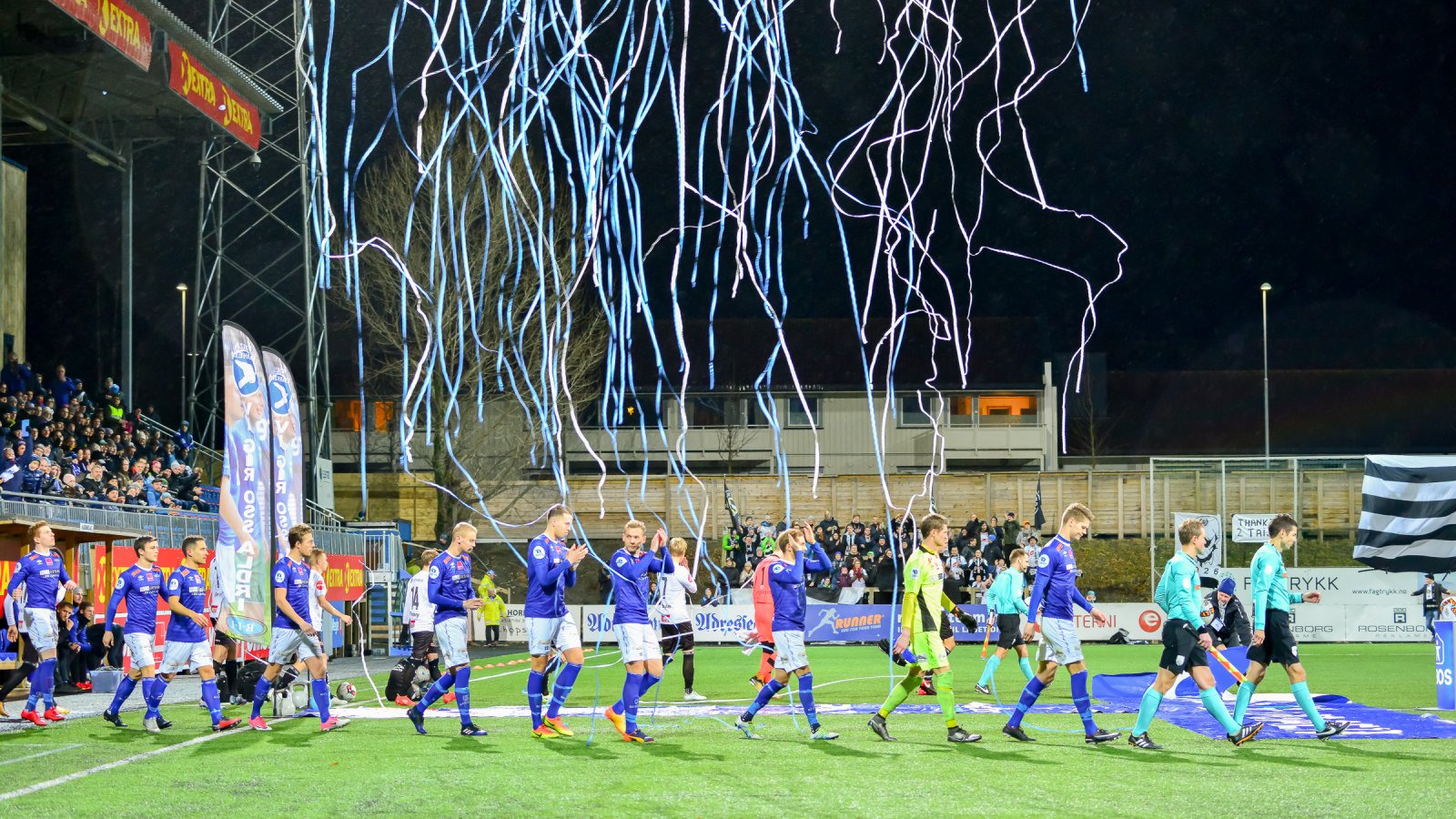
A friend of mine suggested writing a series of articles shedding some light on the lesser leagues in Europe. I loved the idea but instead of going straight in at the deep end and going for something really obscure where I have to build up my knowledge from scratch, I decided to find a middle ground and went for the Norwegian Tippeligaen and it’s vast amount of plastic pitches.
Straight away that was a bad start, I didn’t even realise that Norway’s top flight had lost their sponsorship with Norsk Tipping in 2016 and has subsequently dropped the name Tippeligaen to become the Eliteserien having not found a new sponsor. In my defence, it had been the Tippeligaen since 1990 prior to the change and has only had three league names previously to the Tippeligaen, so it’s not like it’s re-branded every other week.
A proper national title traces its roots back to 1937. Before this, there were only regional leagues and a Norwegian Cup. In 1937, Eight regions were chosen and the winner of these regional titles went into a playoff to decide the national champion, Fredrikstad became the first winners. This was dubbed the Norgesserien and the competition ran until 1948.
After the Norgesserien, something edging toward the current format was created. “Hovedserien” took 16 top teams from the district leagues and placed them in two groups, the winner of these two groups would then go on to play each other in a play off final. I’d love to know how they selected the 16 teams and what factors defined a top team, you’d be upset if you missed out anyway. This format ran until 1961, but the 1961/1962 season became an absolute mess. The Norwegian FA had decided to merge their two premier groups into one but only wanted a 10 team league. This meant that the season for whatever reason ran from Summer 1961 to Autumn 1962 and 8 of the 16 teams were relegated (with 2 new teams getting promoted). It did however edge the format closer to what it needed to be and was necessary in hindsight.
1963 dawned another re-brand and the debut of the one league season with the league now being called 1. divisjon. Someone also realised that it was a stupid idea to have a winter league in Norway (you can imagine a team of 50’s barrel chested footballers refusing to wear gloves when they were waist deep in snow) and finally moved the season to run from March to November, being one of very few summer leagues in Europe. As mentioned, 1 divisjon started as a 10 team league, but swelled to 12 by 1972. This also coincided with the inclusion of Northern teams in the league and the likes of Tromso (who are basically in the arctic circle) were now allowed to gain promotion.
This name ran until 1989, before the league gained the sponsorship deal with the aforementioned Norsk Tipping, with the second tier gaining the 1. divisjon name much in the same vein as the Championship gaining the old top flight trophy in England. The new league created a new dawn of dominance for Rosenborg. Having one the 1991 title, they wouldn’t relinquish it until 2005, with Brann breaking the seemingly unbreakable chain. The sponsorship ran out in 2016 and leaves us up to date with the Eliteserien, phew!
A quick look at the UEFA Club Coefficient (something that I find horribly inaccurate but also something that I’ll have to use as reference in this series) and the Norwegian leagues are ranked 23rd in Europe, below neighbours Denmark (16th) & Sweden (22nd) and bizarrely, only one place above Kazakhstan. I think this is because Astana have done relatively well in European competition recently but it still looks weird. This coefficient basically equates to Norway being given one spot in the first round of Champions League Qualifying for the league winner, a place in the second round of Europa League Qualifying for the league runner up and two spots in the first round for 3rd and 4th respectively, slim pickings then really.
As even the casual fan will realise, that spot in Champions League Qualifying belongs almost exclusively to one club, Rosenborg. In fact, the club have won the league title 26 times since the league inception. To put this into perspective, no one else has made it into double figures. This title haul includes the previously mentioned run of 13 titles on the spin in the 90’s and 2000’s.
In terms of league icons, frankly there isn’t many. As is the problem with a lesser European league, anyone who is successful is quickly moved on to the bright lights of the Western European leagues. There are probably two names that stand out though. The first being the manager that was responsible for that run of titles for Rosenborg.
Nils Arne Eggen happens to be one of my favourite managers having taken inspiration in his style from Rinus Michels’ great Ajax side, playing fast attacking football with focus on movement off the ball. He was a player of some distinction, garnering 29 caps for Norway between 1963 and 1969. Following this, his first job in football then came at Rosenborg in 1971, winning the league at his first attempt. He then left to take over the Norway U21 side before a planned move to manage the senior side. This was an indifferent spell however and he subsequently returned to Rosenborg. Again, he still wasn’t hitting the heights he would later reach and left to manage several lesser Norwegian sides. It was in this period that Eggen really honed his style, with his sides playing absolutely blistering attacking football. A return to his beloved Rosenborg was inevitable and a further 12 titles would follow in this spell (1988-2002), including 10 on the trot. This run also contained a run of 8 Champions League qualifications in a row. He left in 2002, seemingly retiring, but another triumphant return would follow in 2010, taking over the club on a temporary basis part way through the season to win his 15th and final league title, an extraordinary haul.
The most iconic player is also the league’s all time top scorer. Born in the arse end of nowhere in the freezing north, Sigurd Rushfeldt started his professional career at the biggest club in the area, Tromso. From 1992-1994, Rushfeldt developed a reputation as the most feared striker in the division. Big, powerful, pacey and a great finisher, a mega move was inevitable. That chance came with a loan spell at… Birmingham. He was poor in the 1995 season, only playing 7 times in total and scoring one goal in the League Cup against Tranmere. A return to Tromso prompted another fruitful season before a move to Rosenborg, becoming the centre piece of the Eggen side and going on to score 67 in 66 appearances. This led to another loan spell, this time at Racing Santander and again unsuccessful. Rushfeldt finally clicked abroad with a prolific spell at Rapid Vienna before finishing his career back at Tromso to create a Norwegian league total of 172 goals in 299 matches.
The current crop of players if truth be told is weak. My pick of the bunch Franck Boli is scoring goals for fun at Stabaek but I can’t see him hanging round and last years player of the season is a goalkeeper (Andre Hansen). Star power is provided by Nicklas Bendtner, who unsurprisingly has been poor at best at Rosenborg, I don’t even like mentioning him to be honest because of the stupid Lord Bendtner memes on social media, an instant indicator that someone knows nothing about football.
Interest in the domestic game has taken a hit over the years due to the success of the Premier League and Scandanavia’s well documented obsession with English football (1980’s pop group A-ha are Stoke City fans). From a peak average attendance of 10,521 in 2010, the number has dwindled to a lowly 6,027. Teams like Viking and Brann are seeing something of a resurgence in attendance though, especially with Viking making a storming start to the 2019 season. Lets hope they can challenge Rosenborg (who have started woefully) to create an exciting rivalry and drive the numbers back up.
I love the difference that there is between teams in the Eliteserien in terms of facilities, club stature and playing staff and yet still is an “anyone can beat anyone” division. There aren’t many leagues where the likes of Viking and Rosenborg have facilities, staff and players to compete with a lot of big European sides can get beaten quite often by Tromso or Ranheim who have the budget and facilities of a lower league English team, great stuff.

 False 9